Grocery Store Credit Cards Ranked by Real-World Value
Published 2026-04-17 · Deal Hunters HQ editorial team
Store-branded grocery credit cards are heavily marketed at checkout, but the actual rewards math varies wildly. Some return real value to frequent shoppers; others are little more than a marketing tool dressed in plastic. Here's how to evaluate them.
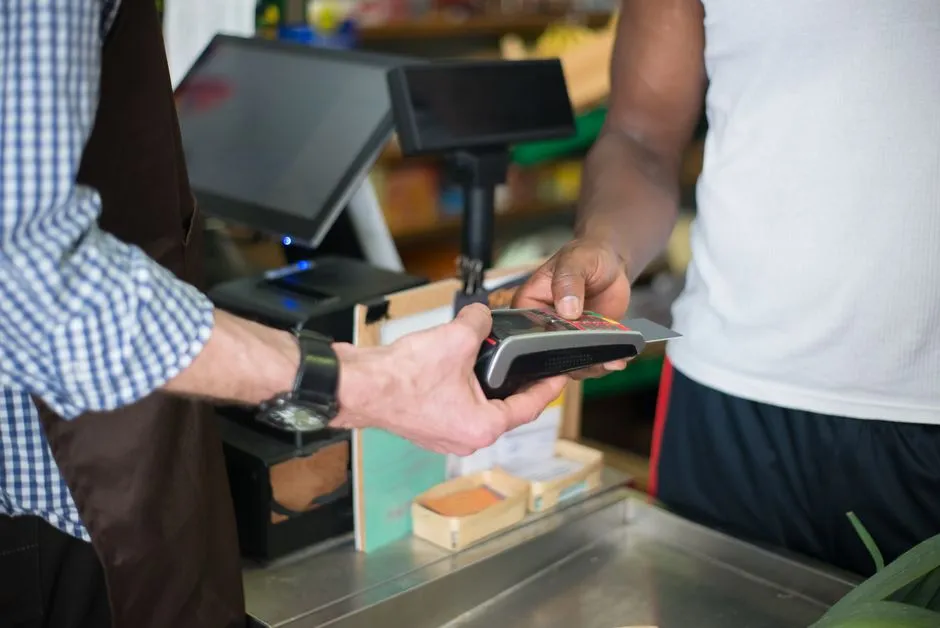
Illustrative photo — paying with a rewards card at checkout.
The fundamentals of Credit Cards
Most shoppers approach grocery savings reactively — they walk into the store, look at the shelf tags, and decide what to buy in the moment. The savings layer sits on top: an occasional clipped coupon, a quick scan of the weekly flyer at the register. That approach leaves real money on the table. Households that systematically apply Credit Cards strategies routinely cut their annual grocery spend by 18–30% without changing what they eat.
The reason it works is structural. Grocery chains operate on razor-thin margins (typically 1–3% net), which forces them to use promotions as their primary tool for moving inventory. That promotional system is published — the weekly ad, the loyalty app, the manufacturer coupon database, the cashback marketplace — and any shopper willing to spend 15 minutes a week reading it can capture the same prices that the savviest 5% of shoppers pay.
A repeatable weekly routine
Every Wednesday morning, the new circulars from your two preferred chains drop. Open both apps. Scan the front page for loss-leader items priced below $1, the second page for the meat and produce rotation, and the back page for household staples like paper goods and detergent. Anything you'd buy this month at full price within 7 days, add to a digital list. Anything that's a true low — a price you haven't seen in 60+ days — buy enough to last until the next predicted low.
The second step is to overlay manufacturer coupons. Manufacturer coupons exist independently of the store and can be combined with store-issued deals on the same item. The best databases are Coupons.com, the manufacturer's own website, and the Sunday paper inserts (still relevant for high-velocity household brands). Match each item on your list to an active manufacturer coupon if one exists.
The third step is the cashback layer. Open Ibotta, Fetch, and Checkout 51 and check whether any of the items you've already planned to buy have an active rebate. These rebates are submitted post-purchase by uploading the receipt and stack on top of every other discount — there's no reason to skip them.
Common mistakes to avoid
Buying things you wouldn't otherwise buy just because they're on sale is the most common — and most expensive — mistake. A 50%-off bag of cookies that wasn't on your list isn't a $3 win, it's a $3 loss. Discipline starts with the list.
The second common mistake is hoarding. Grocery sales are cyclic — every item goes on sale roughly every 6–12 weeks, and freezer space, pantry space, and capital are all finite. Buy enough of a true low to last until the next predicted low, plus a small buffer. Buying 24 jars of pasta sauce because they're $1 each ties up money and shelf space without meaningful additional return.
Putting it together
Combine these layers consistently for three months and the household savings show up clearly in the bank statement. The first month feels slow because you're learning the rhythm of two chains' circulars and discovering which apps actually have rebates on what you buy. By month three, the entire weekly routine takes 12–15 minutes and consistently shaves 25% or more off the grocery bill. That's $1,500–$2,500 a year for a typical four-person household — recurring, compoundable, and entirely under your control.
Bookmark this guide and revisit it every quarter. The mechanics of Credit Cards don't change, but the specific apps, codes, and chains evolve, and a quarterly review keeps your routine sharp.